If you are preparing a gift letter for a mortgage, visa application or other purpose, NotaryServe® can help draft a formal, compliant gift declaration tailored to your situation. For assistance, contact NotaryServe at (613) 558-5363 or contact@notaryserve.ca.
What is a Gift Declaration?
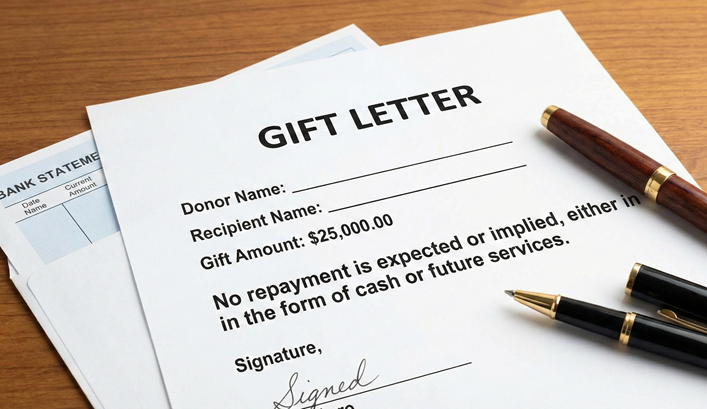
A Gift Declaration (also called a Gift Letter or a Gift Deed) is a formal, written statement confirming that funds or assets given to someone are a true gift and not a loan.
Its purpose is to reassure third parties such as mortgage lenders, government agencies, or courts that:
- The money is legitimate.
- The recipient has no obligation to repay it.
📌 When Do You Need a Gift Declaration?
Not every gift requires a declaration. A birthday cheque or holiday present does not need paperwork. But in high-stakes financial situations, a declaration may be essential:
- Mortgage Applications
- Lenders require a gift letter if gifted funds are used as a down payment.
- Why? Because they calculate your Debt-to-Income ratio. If they suspect the “gift” is actually a loan, it counts as debt and could disqualify you.
- Estate Planning & Large Transfers
- A declaration or gift deed clarifies intent when giving significant sums as early inheritance or financial support.
- If the donor passes away, it prevents disputes over whether the money was a loan to be repaid to the estate.
- Divorce or Separation Protection
- In many jurisdictions, gifts to one individual are considered excluded property (not divided during divorce).
- A declaration proves the funds or assets were intended solely for you, protecting your assets.
- Tax Audits
- Large deposits can trigger red flags with tax authorities.
- A gift declaration provides proof that the funds are gifts and may not be taxable (subject to local tax laws).
- Immigration
- Large deposits without explanation can lead to the rejection of your visa or PR application
- A gift declaration proves the source of the funds and confirms that the funds belong to the recipient.
📝 What should a Gift Declaration Contain?
To be legally effective and accepted by banks, your declaration should include:
| Section | What to Include |
| Donor Details | Full name, address, phone number, and email of the person giving the gift. |
| Recipient Details | Full name of the person receiving the gift. |
| Relationship | Explicitly state the relationship (e.g., "Mother," "Brother"). Note: Many lenders only accept gifts from immediate family. |
| Gift Amount | The exact dollar amount (e.g., "$15,000.00"). |
| The "No Repayment" Clause | Crucial: You must include a sentence stating: "No repayment is expected or implied, either in the form of cash or future services." |
| Property Address | If the gift is for a house, include the full address of the property being purchased. |
| Source of Funds | Bank and account details where the money originates. Lenders often verify this. (Lenders often ask for bank statements to match this.) |
| Signatures | Signatures of both the Donor and the Recipient, and the date of signing. |
🔒 Why Should a Gift Declaration Be Notarized?
While some lenders may accept a standard letter, notarization adds an extra layer of protection. Here’s why it matters:
- Authenticity & Lender Confidence
- Notarization verifies the signer’s identity.
- Prevents disputes over forgery or unauthorized signatures.
- Many banks require notarized gift letters to prevent fraud.
- Self-Authenticating Evidence in Court
- A notarized document is considered self-authenticating.
- If challenged, the notary’s seal itself proves validity—no need for extra testimony.
- Protection Against “Change of Heart”
- Family dynamics can shift. A notarized declaration stating “no repayment is expected” is your strongest defence if someone later demands repayment.
⚖️ Final Word: A Small Step for Big Peace of Mind
When transferring large sums, do not rely on a handshake. A properly drafted and notarized gift declaration can save you from mortgage rejection today or a courtroom battle tomorrow.
At NotaryServe®, we help clients prepare and notarize gift declarations that meet lender, IRCC, and legal requirements, giving you peace of mind and protecting your financial future.
👉 Next Step for You:
If you are preparing a gift letter for a mortgage, visa application or other purpose, NotaryServe® can help draft a formal, compliant declaration tailored to your situation.
Contact Us
Call: 613-558-5363
Email: contact@notaryserve.ca
Book Online: notaryserve.ca/contact
Walk-ins are welcome!

This post is for informational purposes only and should not be considered legal advice. Please consult a qualified lawyer or professional for guidance specific to your situation.